 Guaria Montessori
Curiosity Begins
Your baby is becoming more alert and aware. This month is about encouraging early movement, sound awareness, and the beginning of grip. Remember: babies cry because of hunger, tiredness, discomfort (diaper), or boredom — understanding this helps you respond with confidence.
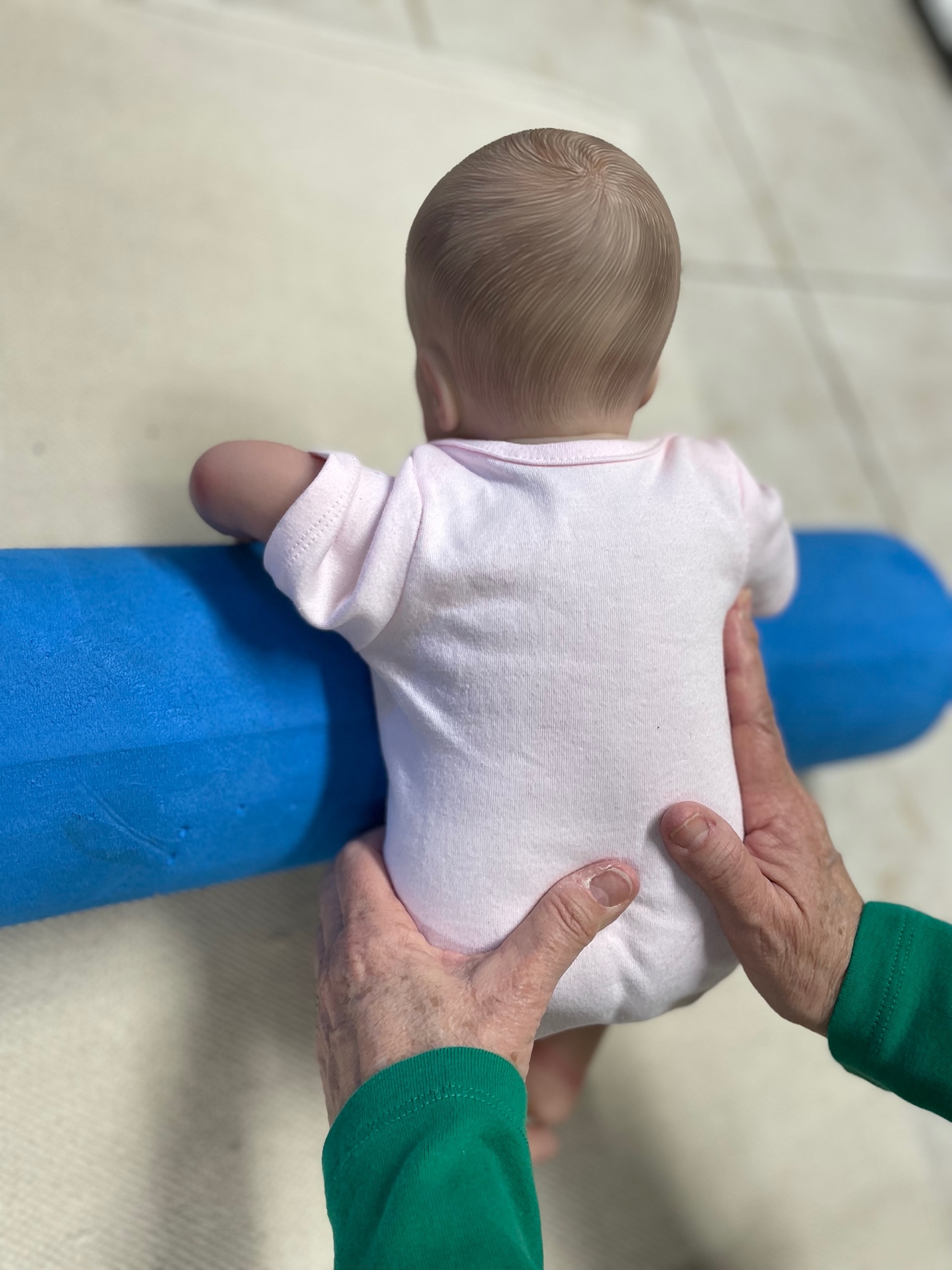
Rolling Over
DiscoveryHelp your baby practice rolling from tummy to back and back to tummy. Support them gently — they are learning how their body moves through space.
Why this matters: Rolling is one of the first whole-body movements your baby initiates. It requires the brain to coordinate muscles on both sides of the body simultaneously — an early form of bilateral integration that later supports crawling, walking, and even reading (which requires both brain hemispheres to work together).
Finding Sounds
LanguageWhen someone speaks or makes a sound nearby, watch your baby turn toward it. Encourage this by talking from different positions — this builds sound localization and early listening.
Why this matters: Sound localization — turning toward a voice or noise — requires the brain to compare input from both ears and calculate where the sound is coming from. This is sophisticated spatial processing, and it's the foundation for the auditory discrimination that later supports language and music.
First Grip
FocusPlace small, safe objects in your baby's hand. Let them hold, shake, and move them. This is the beginning of intentional grasp — the first step toward Montessori hand work.
Why this matters: The transition from reflexive grasp to intentional holding is one of the most important developments in the first months. When your baby holds an object on purpose, they are activating the prefrontal cortex — the brain region responsible for planning and intention. This is the very beginning of executive function.
The Montessori Ball
DiscoveryGive your baby a soft Montessori fabric ball. Its texture and shape invite exploration — grasping, mouthing, and feeling different surfaces.
Why this matters: A Montessori ball is designed to be imperfect — soft, graspable, and slightly unpredictable. Unlike a smooth sphere that rolls away, it stays within reach, rewarding effort. This teaches your baby that their actions produce results — the earliest experience of cause and effect.
Tiny Pushes
DiscoveryWith your baby on their tummy, gently press the soles of their feet with your hands. They'll push back — this builds leg strength and the instinct to move forward.
Why this matters: When you press against your baby's feet and they push back, they are experiencing Newton's third law with their body. This builds leg strength, but more importantly, it creates a feedback loop between the brain and the muscles — teaching the nervous system how to generate and control force, which is essential for crawling.
Head Support
FocusDuring tummy time, encourage your baby to hold their head up longer. Place interesting things at eye level to motivate them. This builds neck strength and visual engagement.
Why this matters: Head control is the gateway to everything. Until your baby can hold their head steady, their visual field is limited and their hands aren't free to explore. Building neck strength through motivated tummy time opens up the world — literally changing what your baby can see, reach, and interact with.
Next month: Strength and Smiles
These activities are gentle suggestions based on typical developmental stages. Every child develops at their own pace. Always supervise your baby closely during any activity. If you have concerns about your child's development, please consult your pediatrician. Guaria Montessori provides these resources for informational purposes only — they are not a substitute for professional medical or developmental advice. Full terms & disclaimer.