 Guaria Montessori
First Connections
In this first month, the most important thing is the bond between you and your baby. Everything begins with closeness, touch, and your voice.
Chest Time
FocusPlace your baby tummy-down on your chest. This skin-to-skin contact builds security and helps your baby begin to focus on your face and voice.
Why this matters: During the first weeks, your baby's nervous system is calibrating to the outside world. Skin-to-skin contact regulates heart rate, breathing, and stress hormones. Being close to your heartbeat recreates the safety of the womb and frees your baby's brain to begin processing new sensory input — the first step toward focused attention.
Gentle Massage
DiscoveryWith gentle hands, massage your baby's whole body — arms, legs, back, feet. Direct skin contact helps your baby discover their own body and builds a sense of trust.
Why this matters: Touch is your baby's most developed sense at birth. Massage stimulates the somatosensory cortex — the part of the brain that maps the body. Each stroke helps your baby build an internal model of where their body begins and ends, which is the foundation for all later purposeful movement.

Black and White
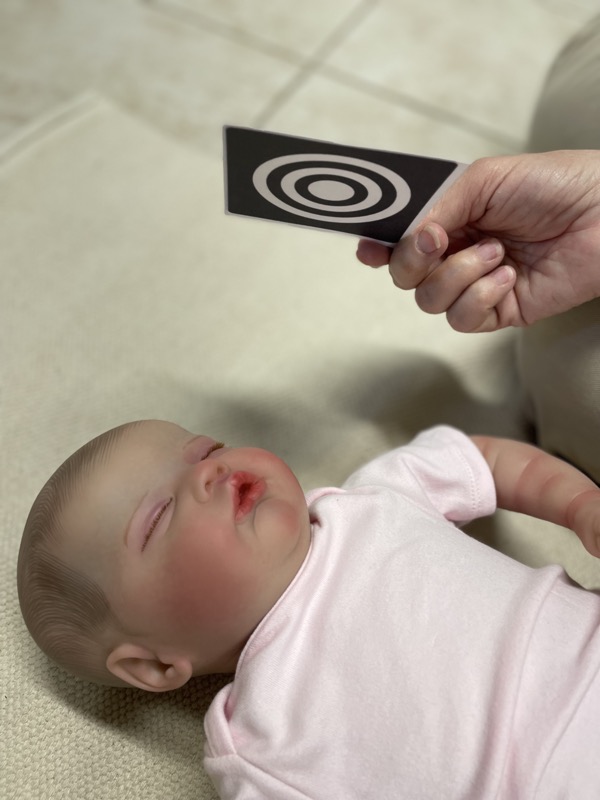
FocusShow your baby simple black-and-white images or objects. At this age, high-contrast patterns are what their eyes can focus on best — this is the very beginning of visual attention.
Why this matters: Newborn eyes can only focus 8–12 inches away, and the neural pathways for color vision aren't fully formed yet. High-contrast black-and-white patterns are the strongest visual signals their brain can process, strengthening the connections between the eyes and the visual cortex — the beginning of the ability to pay attention.
Quiet Music
RhythmPlay soft classical music at low volume — Mozart, Gregorian chants, or gentle instrumental pieces. This is your baby's first experience of pattern and tone.
Why this matters: The auditory cortex is highly active from birth. Structured music — especially classical pieces with clear patterns — gives the brain ordered sound to process, laying the groundwork for pattern recognition, which later supports both language acquisition and mathematical thinking.
Tummy Time
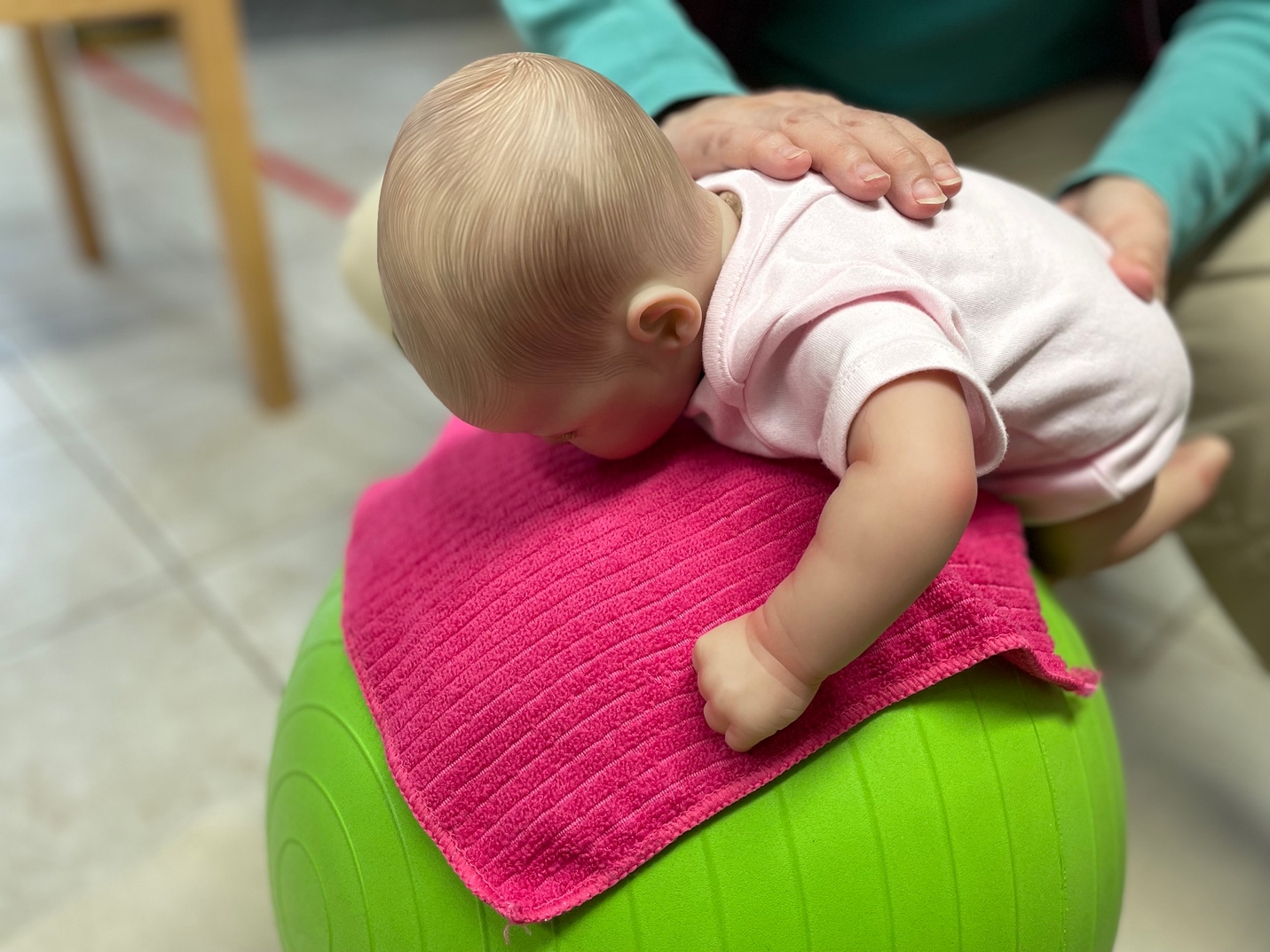
FocusPlace your baby on their tummy on a firm surface or exercise ball for short periods. This builds neck and upper body strength — the physical foundation for everything that comes next.
Why this matters: Gravity is a newborn's first teacher. Tummy time forces the muscles of the neck, shoulders, and core to work against gravity, building the physical foundation for head control, rolling, and eventually crawling. Without this strength, later motor milestones are delayed — and motor development is deeply linked to cognitive development.
Eye Contact
LanguageEncourage your baby to look at you. Hold their gaze, smile, and talk. This is the first conversation.
Why this matters: When your baby locks eyes with you, their brain releases oxytocin — the bonding hormone — and activates the social brain network. This isn't just connection; it's the neurological basis for all future social learning. Babies who experience consistent eye contact develop stronger attention and emotional regulation.
Real Words
LanguageTalk to your baby in a soft voice using real words — not baby talk. Narrate what you're doing. They are absorbing language from day one.
Why this matters: Your baby cannot understand words yet, but their brain is already sorting the sounds of your language — mapping phonemes, rhythms, and intonation patterns. Using real words (not simplified baby talk) gives them richer linguistic input to work with. Every sentence you speak is data their brain is filing for later.
The Mobile
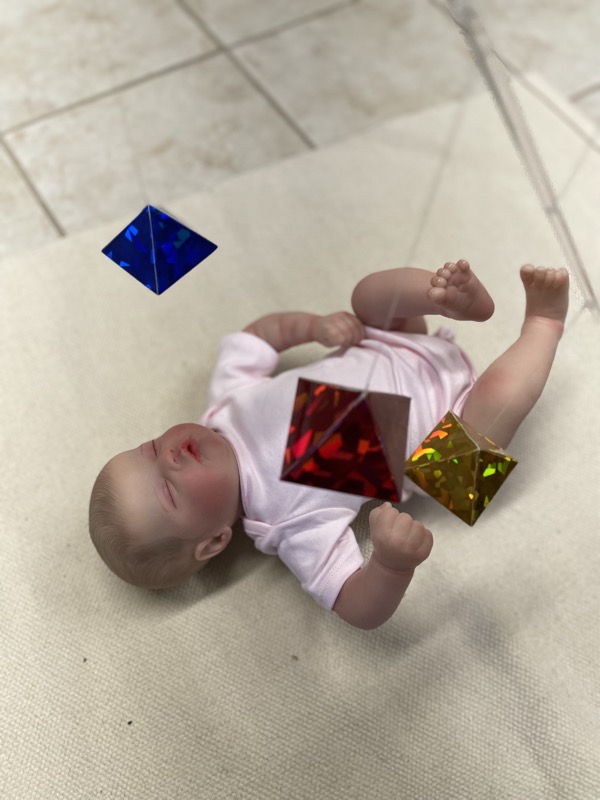
FocusPlace your baby under a simple mobile for short periods. Let them watch the gentle movement — this builds early visual tracking and attention.
Why this matters: Visual tracking — following a moving object with the eyes — is one of the first coordinated brain-body skills your baby develops. It requires the visual cortex, the motor cortex, and the neck muscles to work together. This coordination is a precursor to reading, hand-eye coordination, and focused attention.
Moving Together
DiscoveryGently move your baby's arms and legs — stretching, bending, cycling. This helps them discover their body and develop early coordination.
Why this matters: Passive movement of the limbs stimulates the proprioceptive system — the brain's sense of where the body is in space. This internal GPS is essential for every physical skill that follows, from reaching to crawling to walking. Moving your baby's limbs also builds the neural pathways for voluntary movement.
Next month: Curiosity Begins
These activities are gentle suggestions based on typical developmental stages. Every child develops at their own pace. Always supervise your baby closely during any activity. If you have concerns about your child's development, please consult your pediatrician. Guaria Montessori provides these resources for informational purposes only — they are not a substitute for professional medical or developmental advice. Full terms & disclaimer.